
What No Plan Fixes, and What Helps a Special Needs Parent Anyway
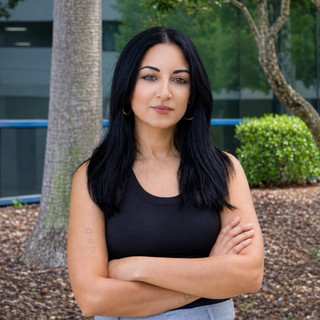

If you are the parent of a child with high support needs, you know the sound I am about to describe. It is not a thought that visits you. It is a hum, running at a medium volume in the back of your mind, every waking moment, about what happens to your child later. The happy moments make it louder, because a good day with your child comes with a second feeling right behind it: this is beautiful, and I am terrified that you will only ever feel it with me.
When we say out loud that we worry about our child's future, I don't think people hear this. They hear a passing concern. I want to write about what it actually is, what has helped me live alongside it, and a few practical things I have done. I am not writing this as someone who has solved it. I am writing it because I have learned that it does not get solved, and nobody told me that.
It Does Not Go Away
Therapy taught me something I did not want to hear. The worry about the future does not fade with preparation. You can build a solid plan. You can build a backup to the plan, and a backup to the backup, and your mind will still walk through each one looking for the way it fails. A mind that has spent years bracing is very good at catastrophizing, and no amount of planning changes the habit.
That is true of every parent, but with a child who may need lifelong support, it is more intense. Every birthday and every milestone arrives with a kind of whiplash. For a typical child, the years widen what is possible. For many of us, they quietly narrow it, and the shape of the future settles in earlier than we expected.
So the goal cannot be a plan you feel at peace with. That plan does not exist. I have stopped looking for it.
The Plan Anyway
I still make plans, because a plan is what you leave behind, even if it does not quiet the hum.
I was told to build a plan with five layers. The reasoning is that if you name one person to care for your child, your mind immediately asks what happens if your child outlives that person. So you name a second, and a third, and you keep going. And if you are a special needs parent, you already know where your mind goes at the fifth layer: what if he outlives all five of them? That is exactly what I mean. The plan never gets finished enough to feel safe. You build the layers anyway, because the layers are what protect him, not what soothe you.
One practical step I took was opening an ABLE account, a savings and investment account for a person with a disability. Family members and friends can contribute to it, even in small amounts each month. Plans differ, so do your research and ask questions before you commit, until you find one that feels like the right fit for your family.
The Teacups
For a long time I have loved thrift stores. I would pick up beautiful porcelain plates and teacups, and I would wonder who they belonged to before me. I made up stories about them. I imagined families who remember a mother, a grandmother, a great-grandmother, through recipes and mannerisms and small traditions and quirks. I imagined those stories being told at family gatherings and handed down to children, because that is how legacy stays alive.
Then I went through a hard season, when I realized that I will not be remembered that way. A child remembering their mother and sharing stories about her with their own children is not the life that is laid out for me.
I think that is where the wish came from, when I finally said it out loud: I would rather be forgotten. Maybe my mind was trying to reconcile with something I could not have. I am planning my life to be forgotten, and I have come to see that as a good thing for Dylan.
When I am gone, I want him to forget me quickly. I don't mean that I want to matter less to him. I mean that I cannot bear the picture of him wondering. Listening for me. Not understanding why, this time, I am not coming back. If I had to choose between being remembered and being forgotten, and the price of being remembered was that he spends his days asking where I am, I would choose to be forgotten, every time. I am not writing that from a dark place. I am writing it from a very clear one.
What Actually Quiets It
What helps me is not a better plan. It is trust, and it has two parts.
The first is trusting that I have built enough love and enough awareness around my son that he would have an army of people, regardless of what happens to me. That is how the wish becomes possible. It is why I keep building quietly, one relationship at a time. If he is surrounded by enough love and enough people who understand him, no single absence, mine included, can leave him alone.
The second is trusting myself. Special needs parents sense things at a deeper level, and I do not think that is an accident. When your child cannot use their voice, or cannot take in the world the way you do because of sensory differences, you learn languages without words. You learn to communicate without them. That ability is real, and it is equipment. Trust it.
Standing Still
There was a time when a bee at the edge of my vision made me come apart. I would catch it in the corner of my eye and my whole body would decide before I did. I moved. I ran. I made noise. Everything in me was trying to put distance between us.
Now when a bee drifts into view, I stand still. I watch where it goes. Almost every time, it wants nothing from me. It is on its way somewhere else.
I learned that from my son. Dylan reacts many times a day: to a noise he did not expect, a texture, a transition, a change no one warned him about. What I do now is nothing, and it is the hardest thing I have ever learned to do. I stay still long enough that he pauses, and in that pause he starts to look for his words. I answer in a way that lets him know I am listening. If I am calm, he is calm. He mirrors what I do and what I say, and somewhere in that mirroring he realizes he does not have to stay in the discomfort.
Underneath it is a promise I make without saying it out loud: I am not going to judge you. I am not going to assume your first response is your true response. Let the reaction come first. Then you can answer.
Put Your Own Oxygen On First
I want to say something about our bodies, because we rarely do.
Researchers at the University of Wisconsin-Madison followed mothers of adolescents and adults with autism for eight days in a row and measured their stress hormones. They found a pattern that the researchers described as consistent with the chronic stress seen in people such as soldiers in combat. They also found that these mothers spent at least two more hours a day on caregiving than other mothers, and were interrupted at work far more often. The study, published in the Journal of Autism and Developmental Disorders in 2009, measured stress hormones rather than diagnosing anything, and its authors said the long-term effects on physical health were not yet known. But it matches what many of us feel. We live at a different level of awareness, and it takes a toll on our bodies.
This is why I stopped treating my own care as optional. The more you take care of yourself, the longer you are here with your child. It is not self-indulgence. It is part of the plan.
For me it is also a daily practice of being present. Some days I have to make that decision every hour, and some days every minute. When I look at Dylan, I do not want him to live inside my worry. I do not want to build him a world designed to hold catastrophe. I want to build one that holds space for him to be himself right now, and to do that I have to be here too, which takes emotional regulation, self-awareness, and mindfulness, practiced again and again. I have not found a solution that makes this stay easy. Reading about other autistic children and adults who are doing well gives me a little hope, and I am grateful for it, but it does not make the rest disappear. It is a choice I make repeatedly. I think that is simply what it is.
Teach the Things He Will Need
Years ago I set academics aside. It was never my goal for Dylan to learn tax law and history. What matters to me is that he learns to advocate for himself, to prepare a meal, to practice safety, to cross the street, to scan a room for help and for threats, to find safe spaces and safe people, and to ask for help. That last one matters most.
I think we have to put that pressure down.
When I did, something happened that still surprises me. Dylan started getting really good grades. He felt comfortable enough to show me he is good at math, that he loves science, and that he loves art. Once I stopped pushing expectations that did not fit him, the skills that were already his began to show.
Give Them Room to Dream
I encourage Dylan to dream big and to tell me his goals. He talks about living on his own someday. He talks about driving, about having friends, and about having a girlfriend. I never answer those with a reason it won't happen. I want those wishes in his heart.
I believe the more a person aspires to, the more opportunity finds its way toward them. So I try to build the goals with him, step by step, even when I do not yet see the path. I would rather say "tell me more about that" than "we'll see." My job is not to know how. It is to keep the wish alive long enough for the path to show up.
Our children are human beings, and human beings want to evolve and explore. They want something bigger than where they are standing today. That includes a sense of purpose, and a purpose needs room: room to explore, room to fail, and room to learn. While we are here, we can offer that room in a safe space.
There is a second reason I think about it. We are all drawn toward people who do good in our lives. If I keep blocking Dylan from things because of my anxiety about tomorrow, how will he find his people? I am working on letting him be himself, because when he is, I believe the right people will find him, and that brings more love and more community into his life. I am still working on it. I fail at it some days.
If You Are Not a Special Needs Parent
I want to speak to you directly, because there is something you can do that costs very little.
It is hard to build community as a special needs parent. Many people believe close-knit special needs communities exist. For most of us they don't, because every child is so different, and because we are too depleted by daily life to build them. Many of our children no longer have birthday parties, because we do not know who to invite. There are few group activities that are not overwhelming. And our children often do not get invited to anyone else's party, because they are not vocal enough in class or in groups to be remembered.
If you know a child with special needs, include them. Invite them to the party. Reach out to the parent, and assume competence. I have read messages from parents who were ecstatic, almost beyond words, that their child was seen and received an invitation. You cannot know what it means to us. These children are atypical in the way that every child is, which is that they have their own way of being in the world. They simply have a different language.
The Layer Under the Plan
I said earlier that a plan with five layers never quite feels safe. There is one more layer, and it is the one I lean on most. It is my faith.
I have felt fiercely protected and loved, and I have watched Dylan be fiercely protected and loved in ways I cannot describe except through my faith. My heart has no other path than to believe there is a story in him, and in the two of us, that is bigger than my worry. There is no way, in my mind, that his story ends anywhere but in love, community, comfort, and joy. Joy is how he lives. He finds it in everything, and I cannot picture his life without it, because he is the one who creates it.
So I am building that faith, and I am introducing it to him. Prayer is part of our routine, offered in the simplest way I can, because his mind is very literal. He understands it. I want faith to be part of his life as well, because I want him to know unconditional love in that way too, one that does not depend on me being in the room.
If faith is not yours, I suspect the thing underneath your plan has another name, and I hope you know what it is.
One More Thing About Time
Time is warped for us. We want it to go fast, because we want to know the solution exists, and we want it to go slow, because we never want to need the solution.
If you are a parent living with the hum, I am with you in it. It is a constant choice, to be present enough for your child, at six or at thirty-six. I make it again every day. I hope you will keep making it too.


Comments