
The Day I Prayed My Son Was Deaf
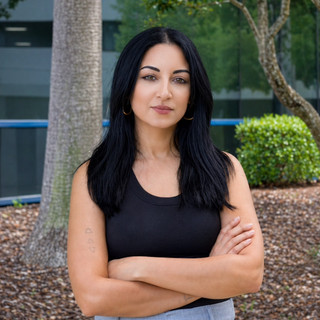

I want to tell this story once, all the way through, so that I never have to tell it in pieces again. If you are here because someone sent you this link the week after a diagnosis, or the week before one, I am glad you found it. I am going to tell you exactly what happened to us. Not the version I give as a side reel or attached to a sarcastic joke about how exhausted I am. The real one.
Before I Had a Word For It
I knew something was different when Dylan was one. Not in the dramatic way people imagine... there was no single moment or flashing sign. He was walking and curious about textures and about the world in the way a one-year-old is supposed to be. But somewhere around his first birthday, he stopped responding to his name. Loud sounds stopped registering the way they used to. This is one of the more common early signs of autism in toddlers, and it's often the first thing a parent notices before anyone has a name for it. I'd even turn the vacuum on just to see if he'd react. Nothing. I'd call his name in different tones. Nothing. There was a thread of connectedness that had (very loudly and painfully) gone quiet.
When a Toddler Stops Responding to Their Name
I brought it up at his next checkup and was told it was typical behavior. I brought it up again. Same answer. I want to say plainly, for anyone reading this who is being told the same thing right now: a mother noticing something is not the same as a mother imagining something.
By the time Dylan was two, the possibility on the table was hearing loss. Before we ever got to the word autism, we had to rule out deafness first. I remember researching the best pediatric hearing specialists in our area with the kind of focus I usually reserve for work I am being paid to do. I was building a plan. I was ready to become an expert in hearing aids, in sign language, in whatever a deaf toddler would need to feel undeniably and fully loved and a needed part of this world.
I need you to understand what I am about to say next, because I have never said anything that felt more true or more strange in my life: I prayed that his hearing test would come back positive for hearing loss. I prayed for a diagnosis.
I want to pause on that sentence, because I know how it can sound, and I don't want to move past it without awareness for the realities that members of the Deaf community face. I am not saying deafness is a lesser thing, or a tragedy, or something to be prayed away. I know there are people in the Deaf community who would rightly tell you it isn't, and I don't say any of this to speak over them. What I am describing is the fear of one mother, in one very narrow moment, working from what little I understood at the time and nothing more. It was not a judgment about deafness. It was me reaching for the version of hard that felt, in that moment, like the one I already knew how to hold.
I have never in my life wanted a doctor to tell me something was wrong more than I did in that moment — because I already understood, somewhere underneath the praying, what it would mean if the test came back clear. Hearing loss had a path. Hearing loss, as frightening as it sounded, was a problem I could see the shape of.
The test came back negative. Everything about his hearing was fine. My heart broke because I already knew what came next.
The Room, the Questions, the Word
The diagnosis itself came on an ordinary day, at a routine checkup. The doctor started asking questions. What words does he say. Does he point to things he wants. Does he look at you when you speak to him.
I remember my voice starting to shake before I had even finished answering the first question, because I could feel where the conversation was heading before he said anything. He was not a warm man, and he did not soften it. He told me, very directly, in the same tone you would share a passing fact, "he's autistic".
I did not know, in that moment, what that word actually meant for our life. I only knew that something had just changed permanently, on an otherwise unremarkable cloudy Tuesday, in a small doctors office in the middle of Enfield, Connecticut. I left with two referrals — a psychologist, a neurologist — and nothing else. No pamphlet. No next step beyond two phone numbers. No one told me what to do with the rest of the day.
The Drive
It is forty-five minutes from Enfield, Connecticut to Watertown, Connecticut. I have driven that stretch of road more times than I could count. Usually during my drives, I would occasionally glance back at Dylan in his carseat, and smile as he slept. Usually, I'd admire the winding roads, and mountains, the greenery softly turning autumn colors, I'd look up at the clouds shifting. But this day... I could not tell you one detail about that drive. I remember it as the longest forty-five minutes of my life, and I remember almost nothing about actually driving it. Grief does that. It empties out everything around the edges and leaves just the center.
I got home. Dylan was fine — he was always fine, in the way small children are fine, unaware that anything about the day had been different. I sat at the dining room table, opened my laptop and did the thing I would tell every parent reading this not to do: I searched "autism."
What I found, in classic "mayo clinic said I'm dying" fashion, was the worst of it. Meltdowns. Crisis. The internet's idea of what this word meant, presented without context, without nuance, without a single story that looked like ours might someday look. I peaked over my screen and looked at Dylan giggling away at Sesame Street. I looked back at the screen. I closed the laptop.
The Decision I Made That Night
I want to tell you about the moment that actually changed the direction of my life, because it was not the diagnosis. It was what I decided to do with it, alone, in my living room, later that same night.
I kept watching Dylan giggling away, and I thought (in the most definitive and determined way I ever had): if you are going to spin in circles, I am going to spin in circles with you. If you are going to obsess over a sound, or a texture, or the way light moves across a wall, I am going to obsess with you.
That was the whole decision. It has not changed since. I did not want to pull Dylan out of his world and drag him into mine. I wanted to climb into his, to understand what he was actually seeing, actually feeling, actually needing, and build a life around that instead of around what a life with a toddler was supposed to look like.
What Came Next
The appointments started. The therapies started. I began researching which states offered the strongest support systems for kids like Dylan, and within a relatively short window, I had decided we were moving to Florida before I even understood the full severity of what we were dealing with. That understanding came later, slowly, in the way I eventually learned it does: watching his peers reach milestones he wasn't reaching yet, one small gap always become a very visible one.
Once we were in Florida, I threw myself into therapy options. Learning, researching, desperately looking for answers. ABA therapy was the first real test, and it did not go the way I expected. Our first therapist's approach involved keeping Dylan in a separate room, away from me, until he produced a word. I stood outside that room and listened to my son cry. I asked him to leave. I called the company and told them, plainly, that they were fired. I did not agree with that approach, and I was not willing to let it continue for one more session.
This is when I learned all of the different avenues of ABA therapy, and the importance of interviewing clinics, asking questions, reading reviews.
I tried a daycare next, thinking that time around other children might help him the way it helps so many kids. Parallel to that was my deep desire to get back to work and feel like a productive member of society. That lasted forty-five minutes. I hadn't gone far. Some instinct kept me close by, and when I went back to check, Dylan was crying in a corner. The staff told me he had not stopped since I left. I picked him up, gathered his things, and made a commitment I have never broken since: I would not leave him anywhere that felt like that to him again. That memory still visits me. It probably always will.
Not long after, I gave up on the hope of having a conventional job. I moved into photography instead. Not as a passion project, though it became one, but because it let me keep Dylan close and stay flexible enough to handle what was becoming a full-time second job of its own: ABA, speech therapy, feeding therapy, occupational therapy, physical therapy, equestrian therapy, music therapy. Anything that might offer a window into his world, or a way of showing him I was trying to meet him inside it. Along the way I found holistic practitioners, alternative therapies, homeschooling, day programs, private schools, conversations about medication, about diet, about supplements — a landscape of options that no one hands you a map for. I am still walking parts of that landscape today, and much of what I've learned along the way is what I intend to share here, in the posts that follow this one.
Bubbles
Dylan did not speak at all until he was five years old.
I remember exactly where I was when I heard his first word. We were living in New York at the time, and I was standing outside a closed door during one of his speech therapy sessions (the only therapy in New York that did not have a one year waitlist). Through the door, I heard him say it: bubbles.
I went straight to the tiny bathroom at the end of the hallway, shut the door, and cried in a way I don't think I had let myself cry since the day of his diagnosis. It wasn't just a word. It was every possibility I hadn't let myself hope for arriving at once; his favorite color, his favorite food, what made him laugh, what scared him, all of it suddenly reachable in a way it hadn't been a moment before. One word swung a door open that I had quietly stopped expecting to open at all.
Fourteen Years Old
Dylan is fourteen now. He is verbal, though not fully fluent, but able to tell me (and others!) what he needs, what he's feeling, whether he's angry or excited or hungry, what he wants to eat, where he'd like to work someday. We can have a real conversation. There was a stretch of years where I genuinely did not know if I would ever be able to say that.
He talks about driving. About living on his own someday. About having a job, and very seriously, as any fourteen-year-old would tell you — about having a girlfriend! (I was not braced enough for this one!). Navigating teenage years with him has been its own entirely new terrain, one I'm still learning as I go.
I want to be honest about the parts of this that don't make it into the version people usually hear. His father and I divorced when Dylan was one, and for long stretches of time during periods of military deployment his dad was called to, it was just the two of us in Florida, without extended family nearby to lean on. We went through years of sleepless nights that turned into sleepless years. We went through aggression, and regression, and a period where solid food was a real struggle — close enough to needing a feeding tube. We went through years of needing sedation just to get his teeth cleaned. His dad and I went through aggression that included biting, and self-harm that I do not need to describe in detail to make the point that it was real, and it was hard, and it asked more of both of us than either of us knew we had. Autism has a way of self-defining co-parenting.
Both of those things are true about our life, in the same breath: the boy who wants to drive and have a girlfriend, and the years that were genuinely brutal to live through. I don't think either truth cancels the other one out. I think they're just both real, the way most honest things about raising a child are.
What Hasn't Changed
The commitment I made that first night — to crawl into his world instead of pulling him out of it, to shape the world around him instead of shaping him to fit a world that was never built with him in mind — is the same commitment I'm still living inside of today. It has been tested more times than I can count, but by God, it has not moved.
If you are reading this because you are early in this same road, I don't have a tidy ending to offer you, because we're not at an ending. We're just further along than we were. What I can tell you is that the version of this story that lives in the search results at ten o'clock at night is not the only version, and it is very often not the truest one. There is another version, and it looks something like a fourteen-year-old boy telling his mother, in his own words, exactly what he wants for his future.
I'll be adding to this space regularly — the ABA experiences, the schools, the therapies that helped and the ones that didn't, the scholarships and funding we found along the way, what it looked like to navigate all of this through deployment and later through a divorce. If any of it is useful to you, that's exactly what it's here for.

Comments